

In its work during the Ukrainian stage of “Media Dialogue 2021” the art-group focused on exploring how art objects (Kiev murals) can talk about social issues. The group saw that street art not only brightens gray buildings and makes cities more colourful, but also helps to draw attention to such serious issues as the environment, violence, health, education, and conflict.
First of all, the media trainer of the group spoke about the main theses that reveal why street art can act as a communication tool for popularizing social problems. The opinions of various world researchers were considered, with the help of Lasswell’s model of communication, the art object-audience communication system was schematically studied, the group was introduced to social murals, and a discussion was held on the role of street art in drawing attention to various problems.
Furthermore, the members of the group got acquainted in more detail with two projects that, with the help of street art, touch on important issues. To better understand how these projects allow art to popularize social problems, the group members carefully studied the art objects, talked with the authors of the idea and creators of these art objects, and also recorded interviews with them.
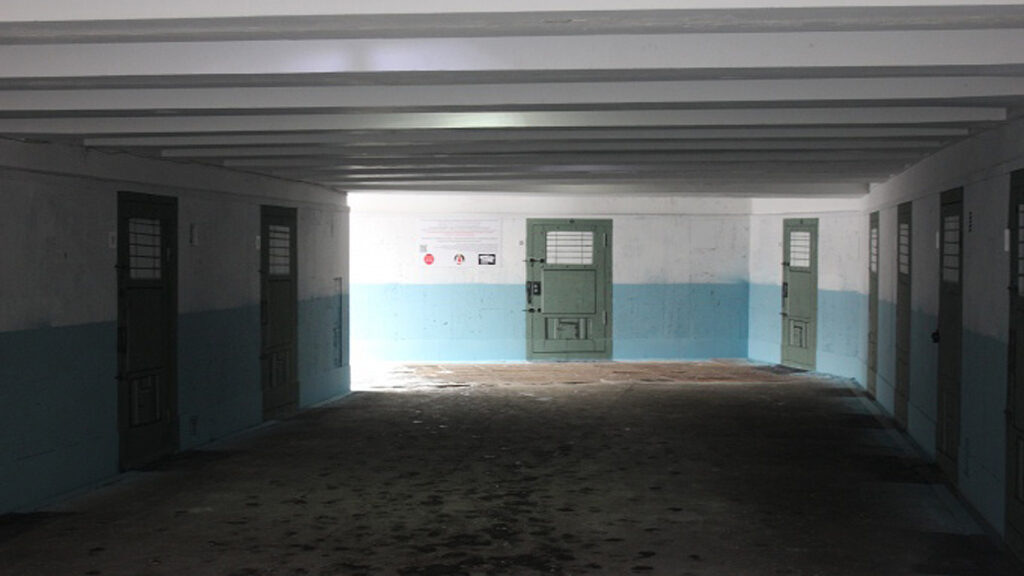
The first project is called “Underground dead end”. It is dedicated to the problem of Crimean political prisoners who are forced to serve a contrived sentence of 10, 15 or 20 years. According to its goals, the project is meant to remind the Ukrainian society that Russia is still holding hostage almost a hundred Crimean political prisoners, as well as raise the level of public awareness of each prisoner. The art object should tell the stories of the captives and help the audience to comprehend their current situation. It does so with the help of QR codes, which are placed near each of the painted prison cell doors. Mila Shevchenko, project coordinator, emphasized in an interview that such a tool could be more interesting for an ordinary Ukrainian than round tables and discussions. In addition, the underground passage is located in the center of Kiev, where many people constantly pass by and this makes the audience of the art object quite large.
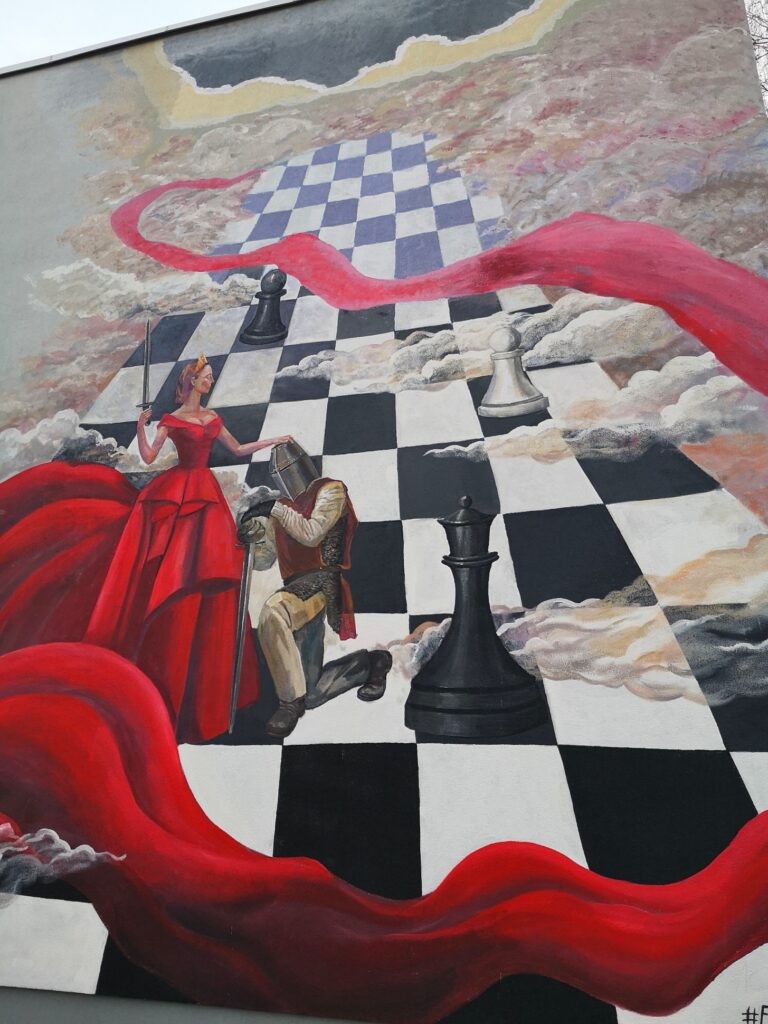
The second project is “Born from the ashes”, it touches upon the problem of domestic violence. This is a series of murals about strong women who have managed to break the cycle of violence in their lives. These art objects urge everyone who is exposed to any kind of violence not to endure but resist it.

The group members talked and filmed interviews with the author of the projects idea, Evgenia Fullen, the author of the sketches and artists Yulia Abramova as well as artist Katerina Serbinova. For them, this project is very symbolic, since they have all experienced violence. Yekaterina Serbinova stressed that people who did not know where to turn, thanks to the “Born from the ashes project, will be able to find a foothold in the form of psychologists and an aid fund that supports the project. Evgenia Fullen emphasizes that it was important for her to show violence not through the prism of black and white photographs of beaten women, which is already too familiar to victims of violence, but to show that a woman can be strong and overcome it, cope, become unexpectedly inspiring. And these murals carry such a positive message of hope.
Additionally, Oleksandra Panova, Project Manager at “Internews Ukraine”, who made a presentation “ARTIFAKE: How Murals Tell about Media Literacy”, and Yelyzaveta Basay specialist in methods and pedagogy of fine arts, who spoke about specifics of murals usage in social problems solution were invited to the final conference.
As you can see, street art not only draws attention to social problems, raises awareness of the audience, but can also be a catalyst for their gradual solution. Over the past year, more than a hundred murals have been created in Ukraine, and one third of them are devoted to social issues. Street art has a wide communication potential in popularizing social problems.