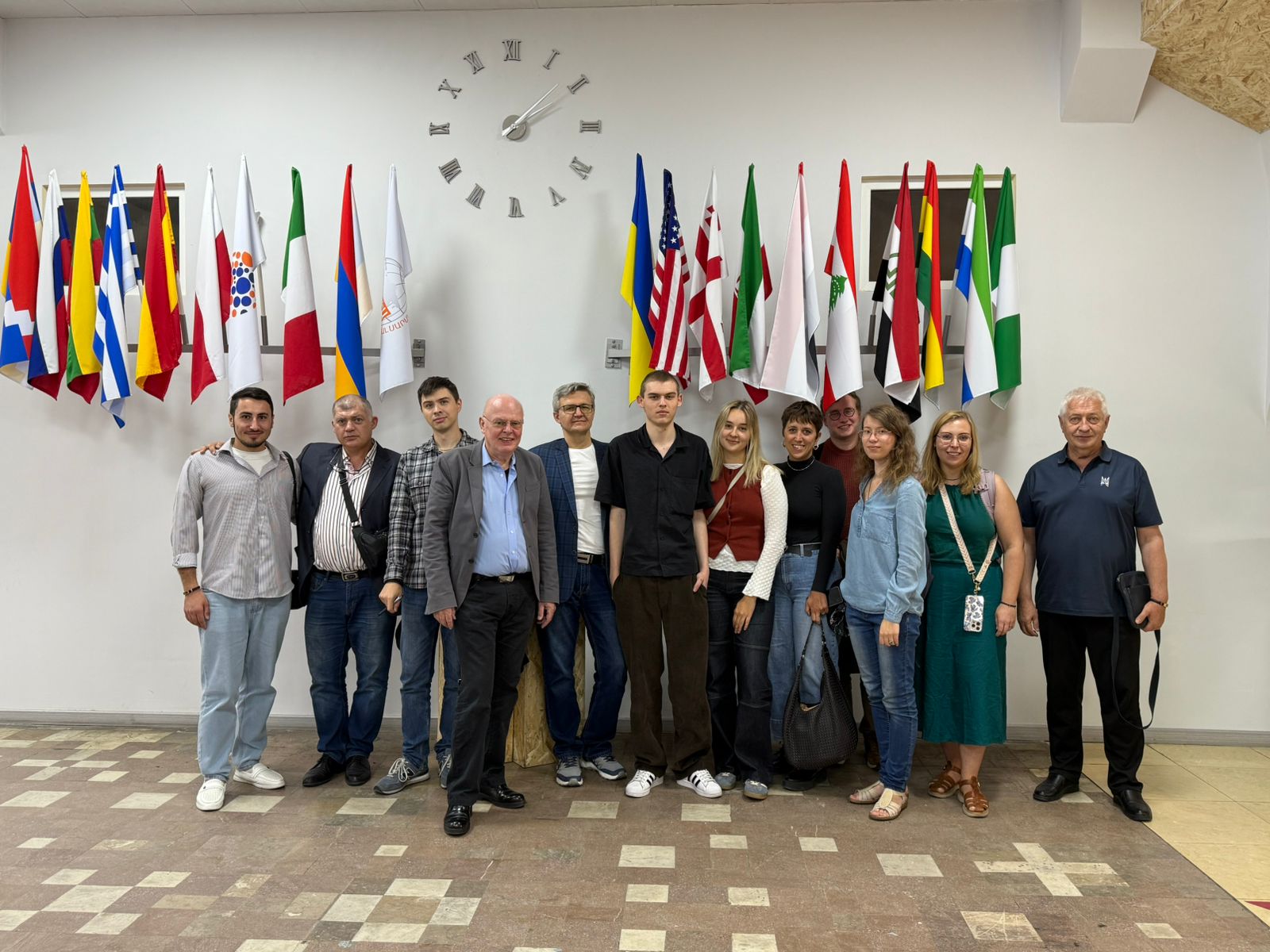
As part of the Media Dialogue project, on September 25, participants visited International Eurasia University in Erevan, Armenia, to explore how media literacy and modern journalism are taught here. The visit provided an in-depth look at the university’s unique method of blending artificial intelligence, fake news analysis, and hands-on media production within its journalism curriculum.
“All faculties, starting from the first year, have a media literacy subject,” shared Edgar Amirkhanyan Vice-Rector for Communication and Public Relations, “they are studying deepfakes, fake news, artificial intelligence, and other current topics that are essential for modern communication”.
One of the program highlights is its focus on AI in media contexts, including tools and skills necessary to responsibly and effectively navigate today’s information landscape. Students are encouraged not only to understand the ethical implications of AI but also to use AI tools in their own research and media production.
“We are very friendly with AI”, said one faculty member. “We are giving them the chance to study AI, but for media and literacy, they must understand how to use it.”
In addition to regular academic coursework, students regularly attend workshops and lectures led by famous journalists, announcers, and media professionals. These events are designed to bridge theoretical knowledge with real-world practice, giving students a deeper insight into how media operates professionally.
The practical thesis requirement is a particularly distinctive aspect of the journalism program at Eurasia University. Unlike many regional universities, where theses are primarily research-based, Eurasia requires that 70% of each student’s final project be grounded in practical media work.
“If you are writing about the discrimination of women in media, or about deepfakes, you have to spend three months working in one of Armenia’s leading media outlets,” explained a faculty member. “You have to produce film reports, long reads, infographics and integrate them into your research.”
During the visit, Media Dialogue participants toured the university’s facilities, including a small studio-style classroom for lectures and practical assignments. The space is designed to simulate a media production environment, allowing students to create content for platforms like Instagram, TikTok and other social media.
“We’re writing articles, blogging, working on the Media Lab YouTube channel, and this room helps us create content with a real media atmosphere”
For more advanced production work, students use the university’s Media Lab, a fully equipped space for filming, editing, interviewing and multimedia journalism.
This visit highlighted the university’s commitment to high-quality, modern journalism education and how it empowers young journalists to engage critically with media and technology. Participants of the Media Dialogue project left with valuable insights into how Armenia is shaping its future media professionals, strongly emphasising ethics, practice, and innovation.