How Sergei Parajanov’s image was discredited: the participants’ visit to the artist’s house-museum
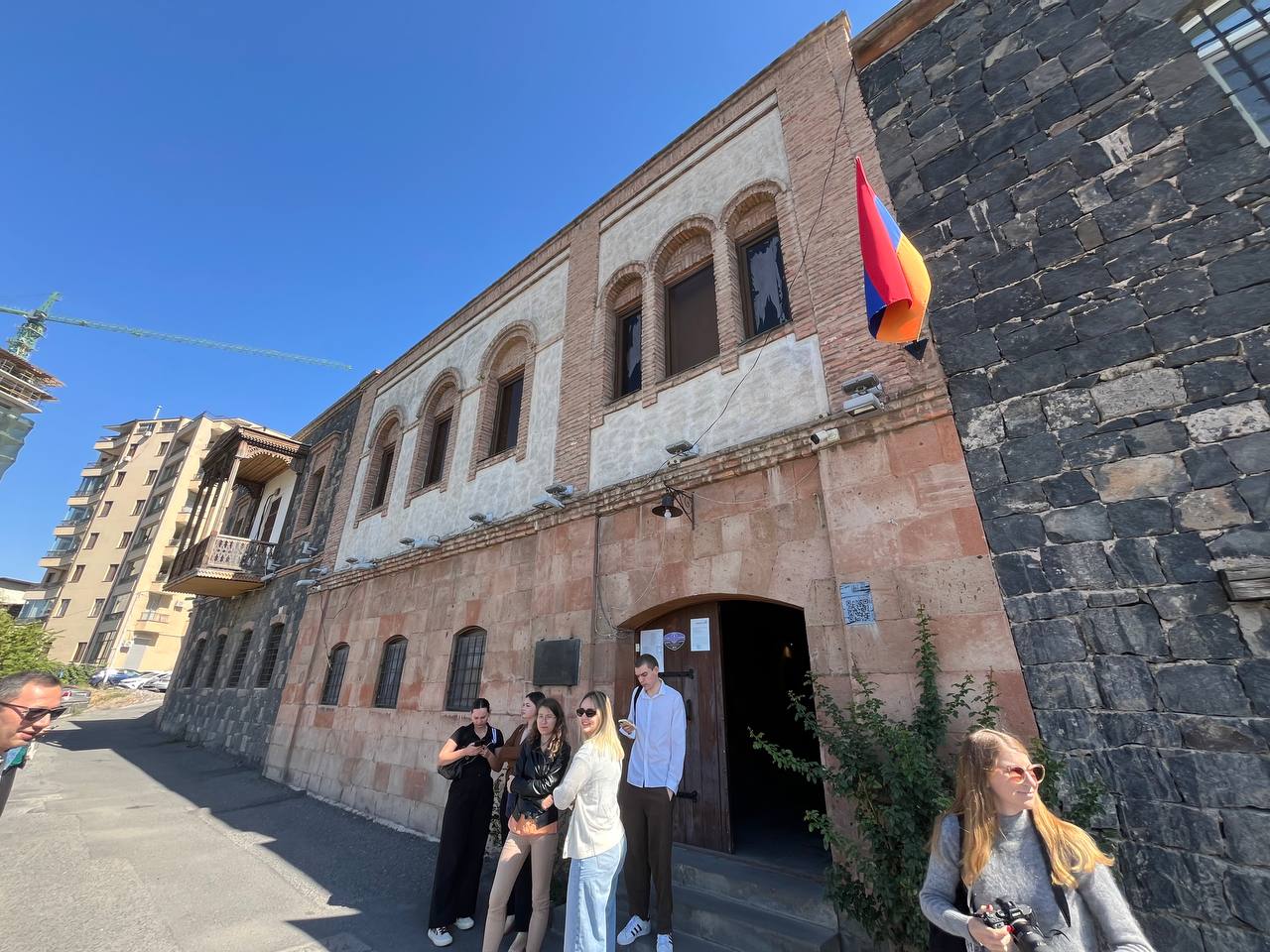
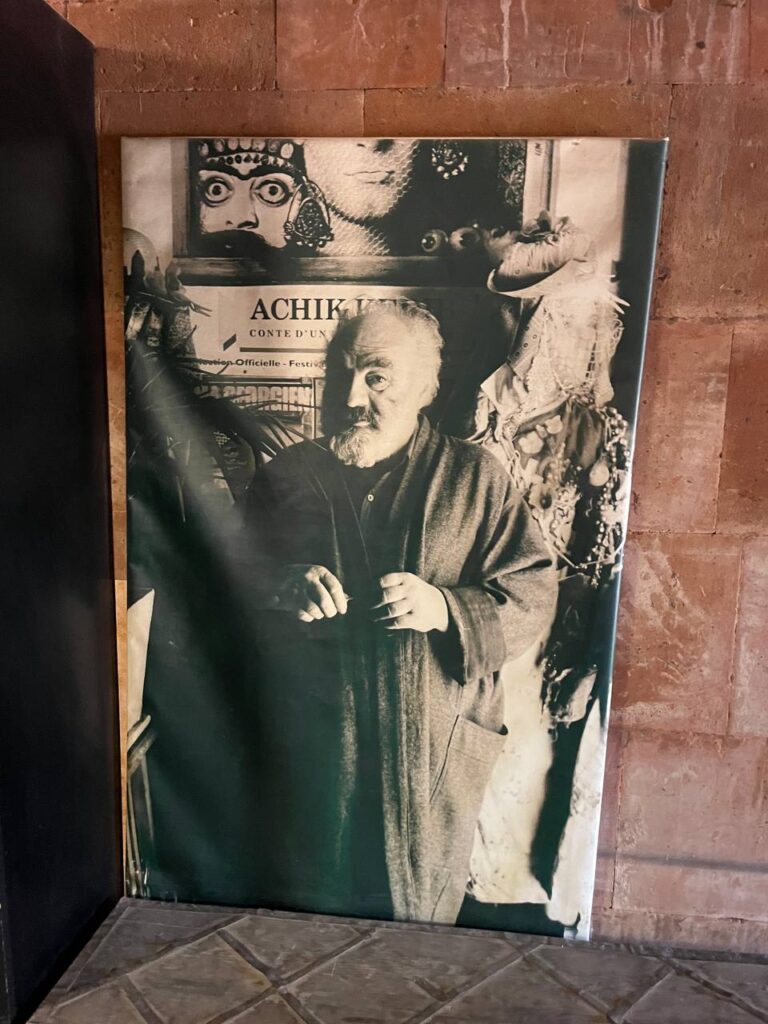
On the third day of the project, September 24, the team visited the Parajanov Museum. One of the media mentors pointed out that the film director has often been misrepresented, facing distortions of fact and accusations from the Soviet government. As a result, his story was framed as propaganda. His surname was also russified, similar to many other Armenians and citizens from post-Soviet states.
“His real name is Sarkis Parajanian. But many people changed their surnames. Life was easier with a Russified surname.”
In the museum, Sergei Parajanov was presented not just as a phenomenal director but also as a talented artist. There is a display of Parajanov’s collages, graphic works, and other unique pieces of art.
According to the words of a tour guide, Sergei Parajanov created only one artwork dedicated to his Armenian origins. It depicts a director and a doctor, who asked his patient about a cardiogram.
“A good one, as all Armenians have. Because all Armenian hearts beat like Ararat. Big, small Ararat”.
The Soviet authorities imprisoned the artist due to political persecution; the official charges were a pretext to silence his artistic and dissident activities. The reason for this punishment was Ukrainian nationalism and opposition to “Soviet art”. However, the authorities had to find a way to hide the real motives and choose an official explanation for the imprisonment.
“What should it be? Homosexuality, violence, and monetary manipulation. These were the most serious criminal charges in the Soviet Union. You could kill someone and then be released under amnesty. But under those three options…”, said the museum guide.
But before putting the director behind bars, the authorities had to present evidence, hence it took them 2 years. On December 17, 1973, the KGB accused Paradjanov of homosexuality and violence.
“One of his friends wrote to the wife of Paradjanov: ‘They called me to interrogate Paradjanov. Of course, I didn’t sign anything about him. But they sent me to rest. I know what it is. They try to interrogate me’ “.
A guide said that this man shot himself because he could not withstand a psychological attack.
After 6 months of waiting, Paradjanov was happy to take him to the prison, as a guide said. He realised that he had to confess to receive a one-year probationary period.
“How do we know? These memories are in a letter to his wife. All his friends came to court cheerfully. But when he admitted guilt, the director was sentenced to five years in a strict-regime labour colony”.
While in prison, Paradjanov created thalers by pressing reliefs onto aluminium bottles with nails. These works are part of the museum exhibition as well.
Soviet propaganda depicted Parajanov as an “immoral” member of society who did not stick to Soviet ideals. This portrayal helped justify his arrest in the eyes of the public. The fabricated accusations enabled the authorities to avoid questions that would have arisen if they had openly revealed the valid reasons for persecuting the director.