writen by Alina Arustamian
The information component plays an important role in modern military conflicts. The way in which media representatives cover armed conflicts can greatly influence the outcome of such events. Therefore, many media outlets provide guidelines for journalists and correspondents, who work in the war zone. But the opinion of military experts, who know the subtleties of conflicts better, is no less essential.
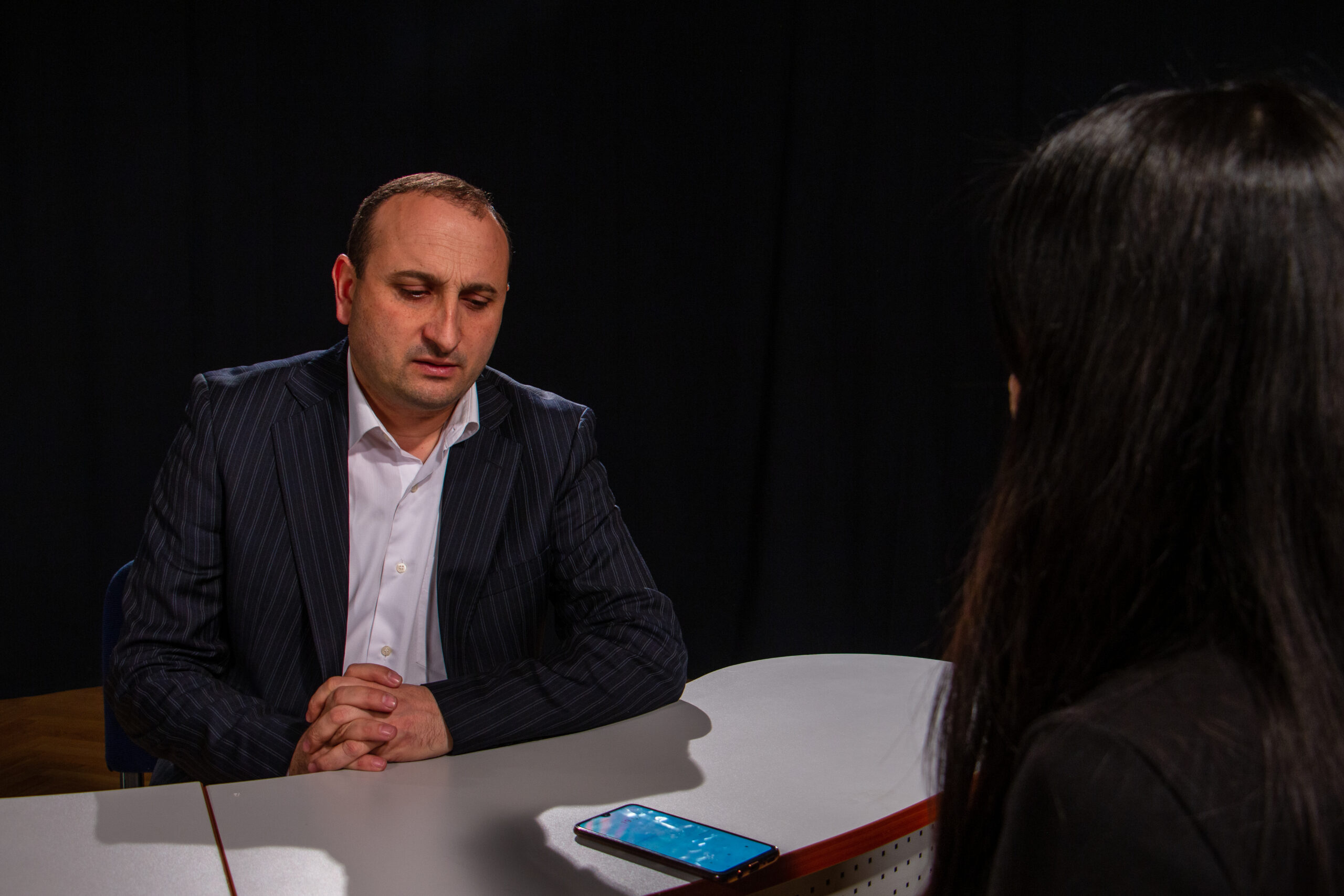
Within the framework of the international project Media Dialogue 2021 military expert Vladimir Harutyunyan shared his experience and knowledge about the role of media in covering military conflicts. He also spoke about the peculiarities of the work of journalists during the Nagorno-Karabakh conflict.
What are the main principles and recommendations that journalists should follow when covering military conflicts?
Currently, the ongoing armed conflicts in the world remain a significant item on the media agenda. Information coverage of the armed conflict in modern times plays a significant role, as it influences public opinion regarding the actions of one side or another. In other words, mass media in many respects creates the timeline of confrontation, determines the attitude of the audience to the opposing sides, and forms the images of opponents in the mass consciousness. News discourse can be seen as the main source from which the public derives meaning from the ongoing hostilities. It should be noted that the coverage of any armed conflict in media requires adherence to the principle of pluralism of opinions since the interested parties tend to create more emotional materials and their publications, at a certain moment, turn into a propaganda channel, while publications of third-party and/or independent authors are often built solely on facts and impartiality.
To the basic principles for the media, I would underline efficiency, reliability, comprehensiveness, impartiality.
What special knowledge and skills do you think military journalists should have?
When covering any conflict, journalists are forced, in one way or another, to refer not only to those events that are relevant to the modern agenda but also to some third-party sources – cultural, historical, political, economic, etc.. Another important aspect: journalists covering the military conflict, more frequently concerned with its purely informational part (news), delivering information (news) in its pure form to the broad masses. However, lacking sufficient knowledge in military affairs, like an assessment of the situation, the balance of forces and means, knowledge of the types of weapons, the development of the battle, tactical and strategic situation and other decisive factors, they are not always able to convey to certain audiences the spirit of hostilities and the necessary analytical data (the intention of the parties, the likely development of the situation and, in some cases, the possible outcome). Therefore, I believe that armed conflicts should be covered exclusively by war correspondents who have the necessary level of knowledge of military affairs.
What video or photographic material from the battlefield cannot be published due to military security?
Unambiguously, for the sake of safety and the security of troops, it is prohibited to publish photo or video materials, especially in real-time, revealing the true locations of military units and subunits, places of manpower and military equipment accumulation, their positions and movements, columns, strategic objects, such as airfields, command posts, communication centres, air defence systems, firing positions, special equipment and their registration or side numbers, points of logistics and technical support, places of collection of mobilization resources.
What are the dangers for journalists during military conflicts?
While in a combat zone, journalists must clearly understand the danger and undergo certain instructions. Falling under fire (shelling), minefields, the likelihood of being hit by a weapon of “indiscriminate nature” are the most common types of danger, and it is important to have and use means of increasing protection, such as a helmet, an armoured vest and the established identification marks of belonging to media.
Please tell us about such cases during the Nagorno-Karabakh conflict. How many media workers were injured during the fighting?
Undoubtedly, the Nagorno-Karabakh conflict itself, as well as the events associated with it, have become one of the most essential topics on the agenda of a number of world media outlets. Unfortunately, I, as a military expert, do not keep accurate statistics, but since the beginning of 1991, a lot of journalists have covered the topic of this conflict and have visited the scene of the events. Now, thanks to the development of modern technologies, many people are more likely to cover the situation remotely. Regarding the latest events, according to the Armenian Foreign Ministry, about 200 foreign journalists from over 50 publications were accredited to cover the hostilities in 2020. For their effective work in Stepanakert a single information centre and all possible conditions of stay and accompaniment were created.
I will mention the cases when, on October 8, Azerbaijani aviation struck twice with high-precision missiles at the Ghazanchetsots Cathedral in Shusha. After the first attack, journalists gathered at the temple, recorded what had happened and left. A little later, another group of journalists arrived here, which included military commander Yuri Kotenok. With him were two more Russians – Levon Arzanov, a journalist of the information portal “Officers of Russia”, and Grant Baladyan, who was accompanying him. The second blast hit the same spot, into the dome of the temple, while the reporters were inside. With severe shrapnel wounds Yuri Kotenok was immediately sent to Stepanakert and from there by helicopter to Yerevan. Levon Arzanov and Hrant Badalyan were taken to the hospital in Shusha with minor wounds and then to Stepanakert.
Another case was, when in the city of Martuni in Nagorno-Karabakh on the 1st October a group of journalists came under the shelling of the MLRS “GRAD” of Azerbaijani troops, as a result of which two Le Monde journalists, Allan Kaval and Yaghobzadeh Raphael Charles, were seriously injured. The reporter of the 24news.am portal and the operator of the Armenia TV channel were slightly injured. The deputy editor-in-chief of the Dozhd TV channel Dmitry Yelovsky and accompanying persons were not injured.
How do journalists work in Artsakh now? Are there any restrictions on obtaining permits for foreign media?
Until fall of 2020, in order to visit Artsakh and cover the events there, foreign journalists and foreign citizens in general only had to go through a simple registration procedure at the permanent representation of the Republic of Artsakh in Yerevan. No special restrictions were imposed on their work, apart from the dissemination of data that could affect issues of state security. Military journalists can visit the front line, combat positions, military units only when accompanied by representatives of the Ministry of Defence.
The conditions for visits and restrictions after the war of 2020 remain unchanged, however, due to the posting of Russian peacekeepers and their checks to enter Artsakh, many foreign journalists are now refraining from visiting the territories of Artsakh.