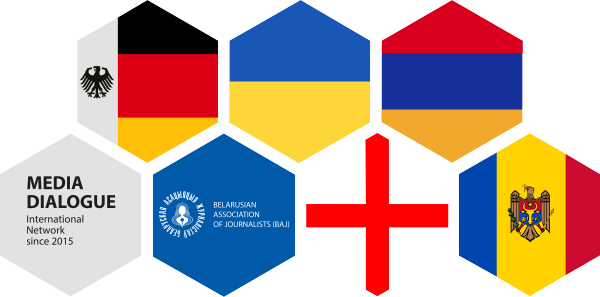
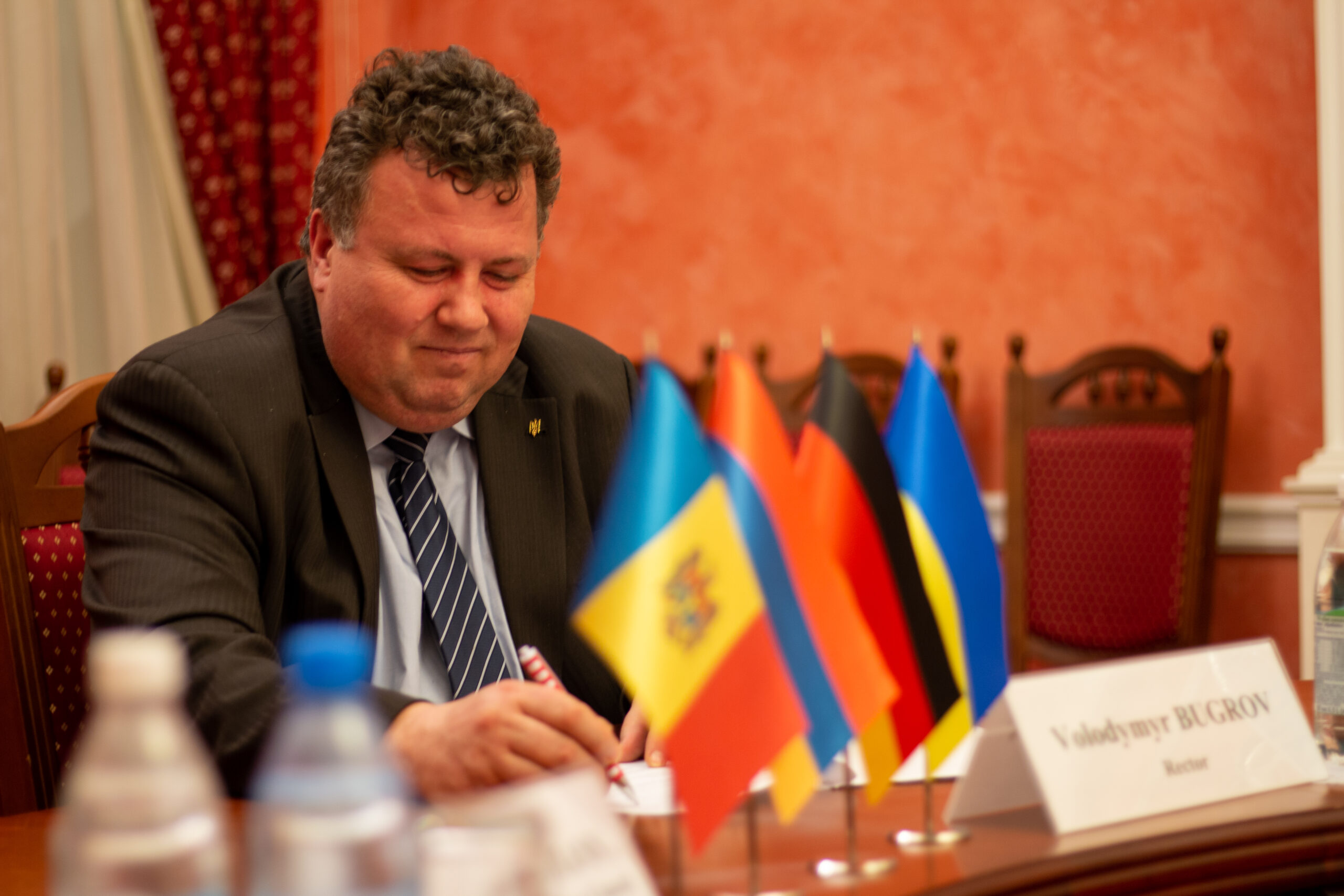
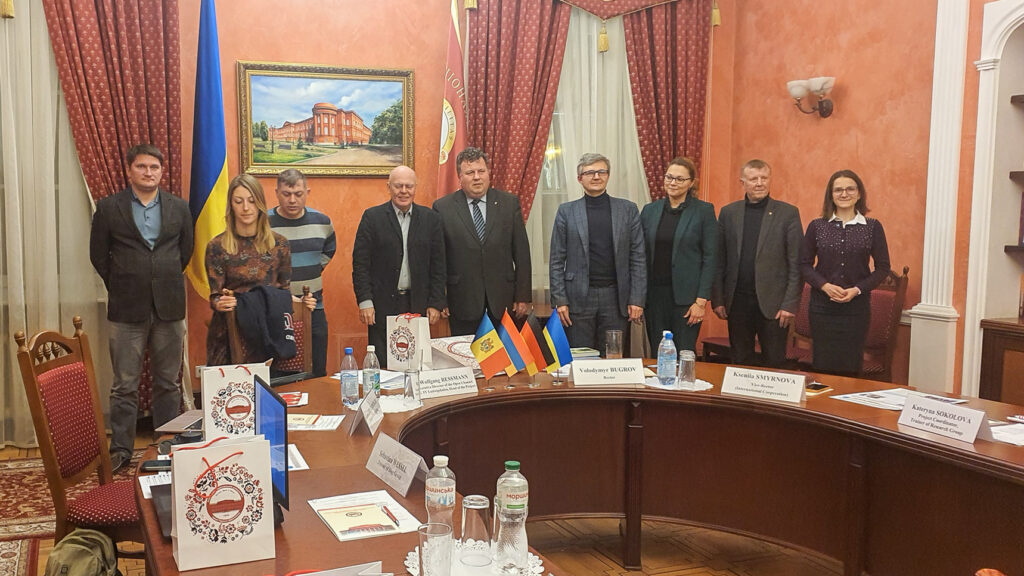
Media Dialogue is celebrating its 6th anniversary. As a network and cooperation of journalists academics, artists and students it manages to convince more and more countries to join its cause to stabilize and strengthen the free press. On the 25th of November the heads of the NGOs and faculties comprising the project gathered in the reception room for official delegations within the historical Taras Shevchenko National University of Kyiv (KNU) to meet with its rector, Volodymyr Bugrov. Together they wanted to review the project and its products and discuss the KNUs future involvement in the project.
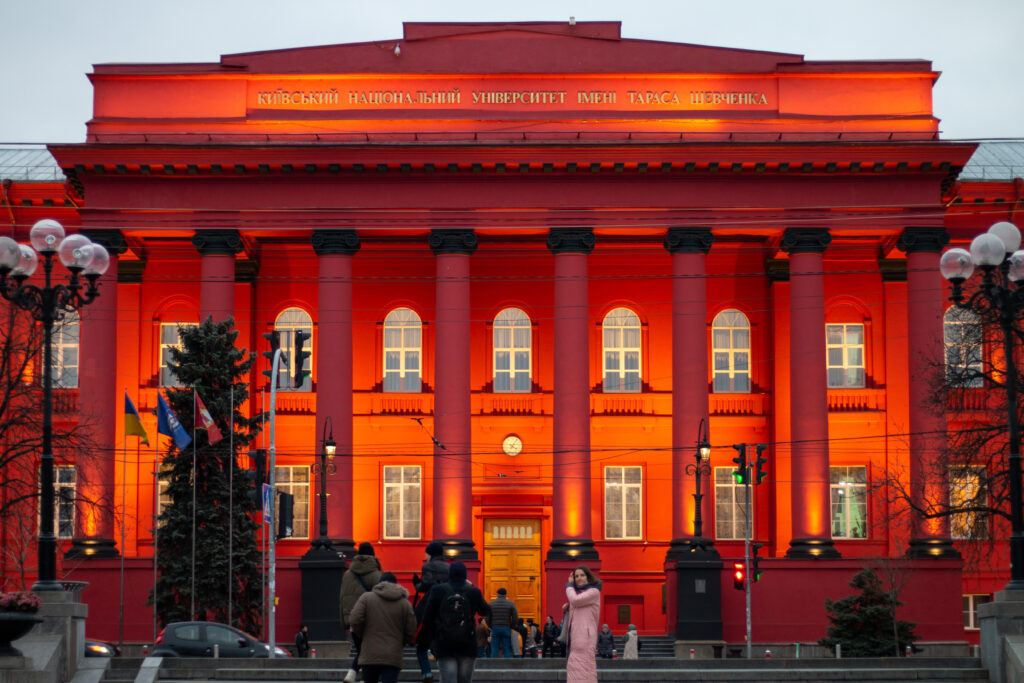
Professor Volodymyr Bugrov, himself professor for history and philosophy at KNU, welcomed the attendees and opened up by explaining the University’s significance for its country. With 27000 students currently enrolled, 1000 of which serving in the military, it shapes the future society’s cultural identity. After all, two out of the previous six presidents graduated from KNU. Initially built at the edge of the city, the University now sits at the heart of modern Kyiv and Ukraine.
“I am happy that this meeting is taking place, especially in the face of the challenges Ukraine is going through related to media.”
Wolfgang Ressmann, executive director of the open channel OK-TV Ludwigshafen and Head of the Project, began to present the project to the rector, from its initial impetus of developing democratic media and bringing former soviet nations closer together, to its most recent developments, like Moldova joining the projects cause. He also recounted some of the partnering countries struggles, like the fights for Nagorny Karabach, the conflicts around Transnistria and the suppression of free speech, all of which fueled by propaganda and unethical journalism and are at the forefront of the projects media education.
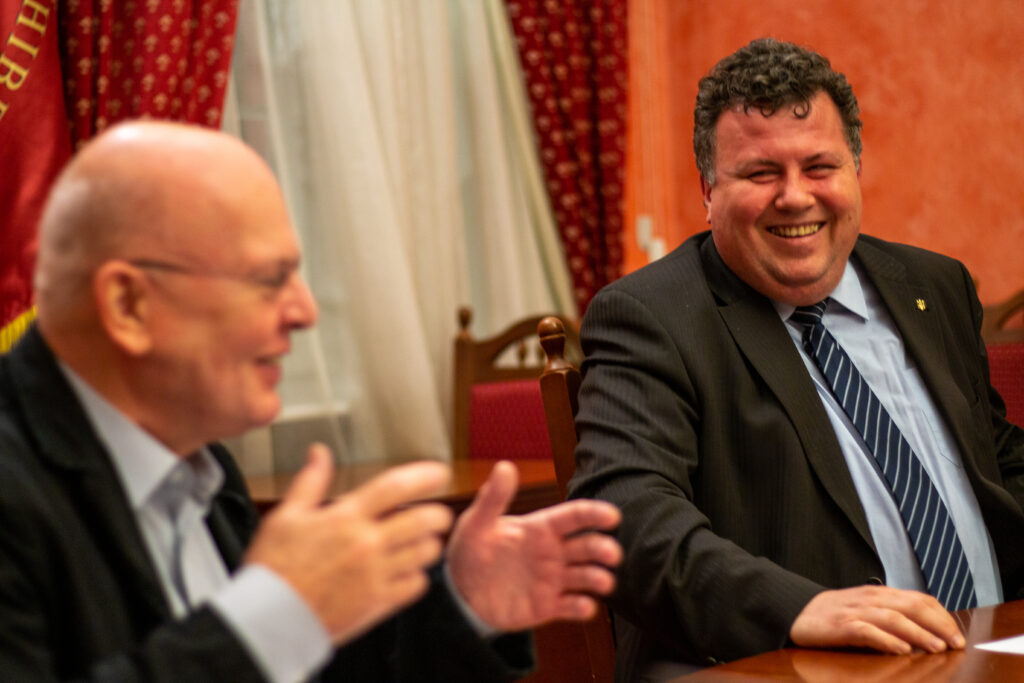
Mkrtich Tonoyan, president of the AKOS Cultural NGO, founder of the “Art Centre of Social Studies ”, from Armenia emphasized the importance of art in journalism and cultural exchange. He expressed his worries about large countries growing beyond their borders by exporting their culture, whereas smaller countries lack the reach to do so.
“In the future, with every other country that joins the project, we are going to share art and culture and experience.”
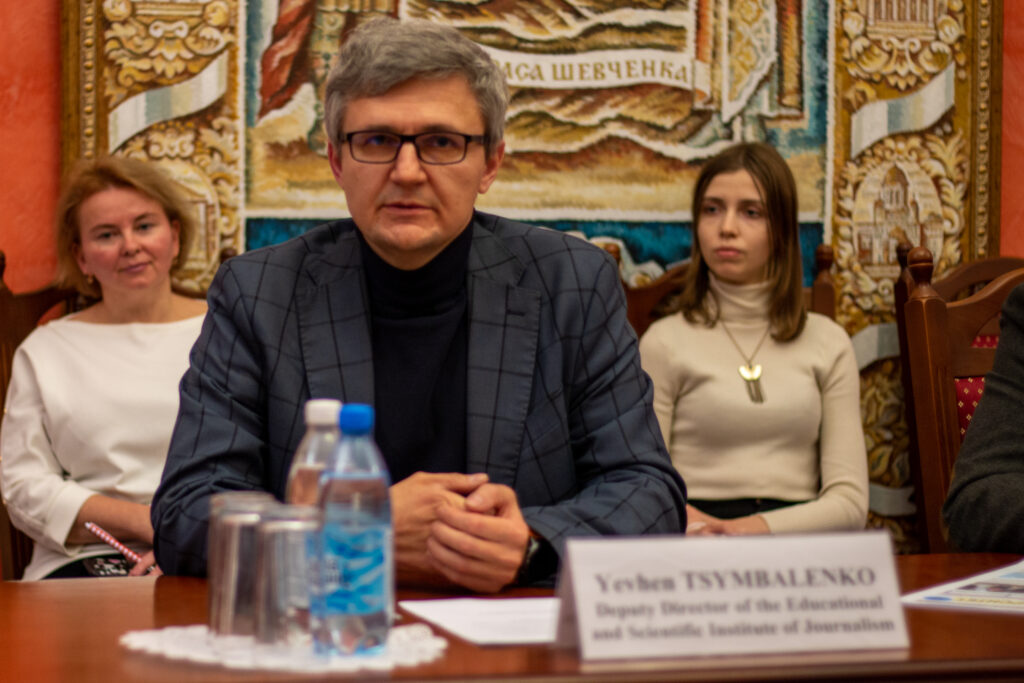
Yevhen Tsymbalenko, Deputy Director of the Educational and Scientific Institute of Journalism, said that the project was a great opportunity to connect students with professional journalists and put them to work in real conditions.
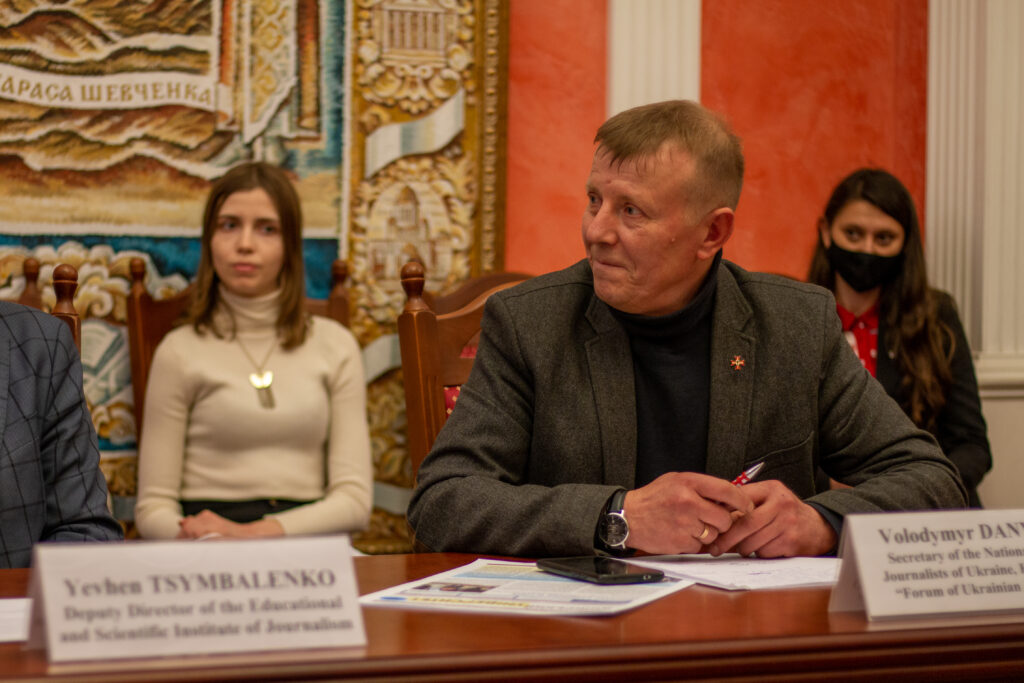
Volodymyr Danyluk, Secretary of the National Union of Journalists of Ukraine and Head of the NGO “Forum of Ukrainian Fournalists” stated how significant it is for him that the project is staged at this university. Not only is it the main university of the country it is also where his teacher, he himself and now his daughter went to study journalism. In his opinion the project is a great opportunity for young students of journalism to gather practical experience.
“We may not be able to slow down time, but we can enhance the speed at which media develops.”
Constantin Uzdriz, member of the Association of independent Press of Moldova, mentioned that Moldovan media is still in a process of reform after the formation of the new government under president Maia Sandu, who is seeking to deepen their political association and economical integration with the EU. But independent press doesn’t have a lot of chances to properly develop with a lot of the private media companies still under the control of oligarchs like Igor Dodon monopolizing the market. It has also been difficult for Moldovans to understand what has been going on in Ukraine because there is still a lack of close personal contacts between journalists between the two countries. Building these bridges between Chișinău and Kyiv is a fundamental step to combat misinformation.
Wolfgang Ressmann concluded that the worsening situation had been an incentive to push the project forward. Unfortunately last years meet-ups had to be canceled due to the global pandemic and had to be held online instead. But with the experience gained from it, hybridizing the events, by preparing the participants online, will be the way to improve future stages of the project.
He also mentioned that submitting the project to the Erasmus+ Program or Foundations in Germany are being considered for future funding.
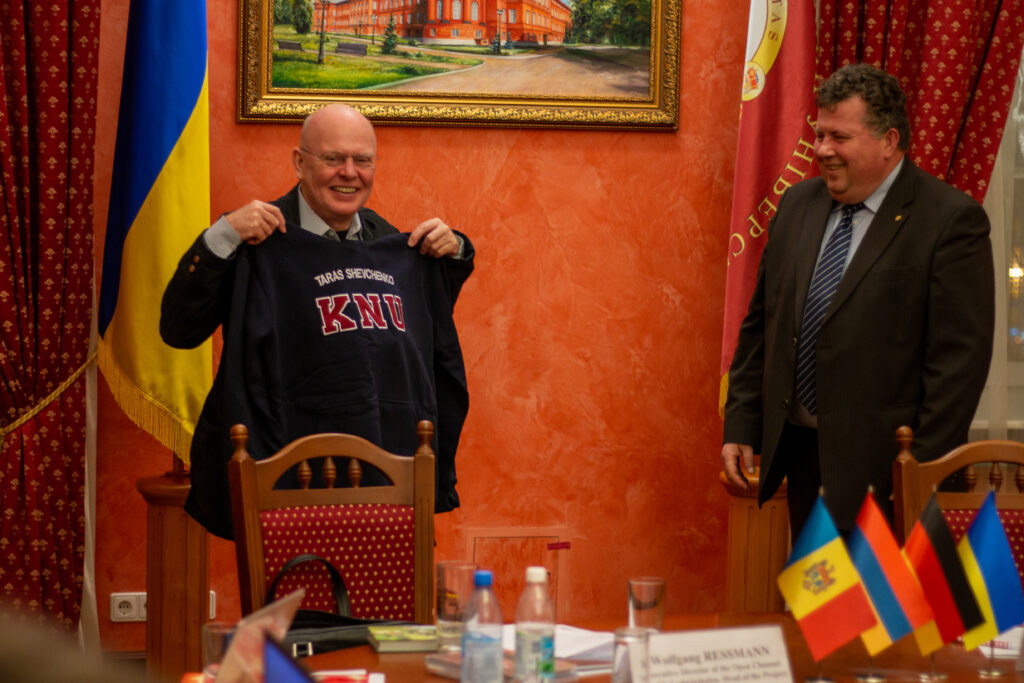
Professor Bugrov seemed enthused by the products and the partners anecdotes and at the end of the conference, after the exchange of local gifts, he exclaimed that he was looking forward to further years of cooperation with closer involvement on his part.
–written by Sebastian Wessel