
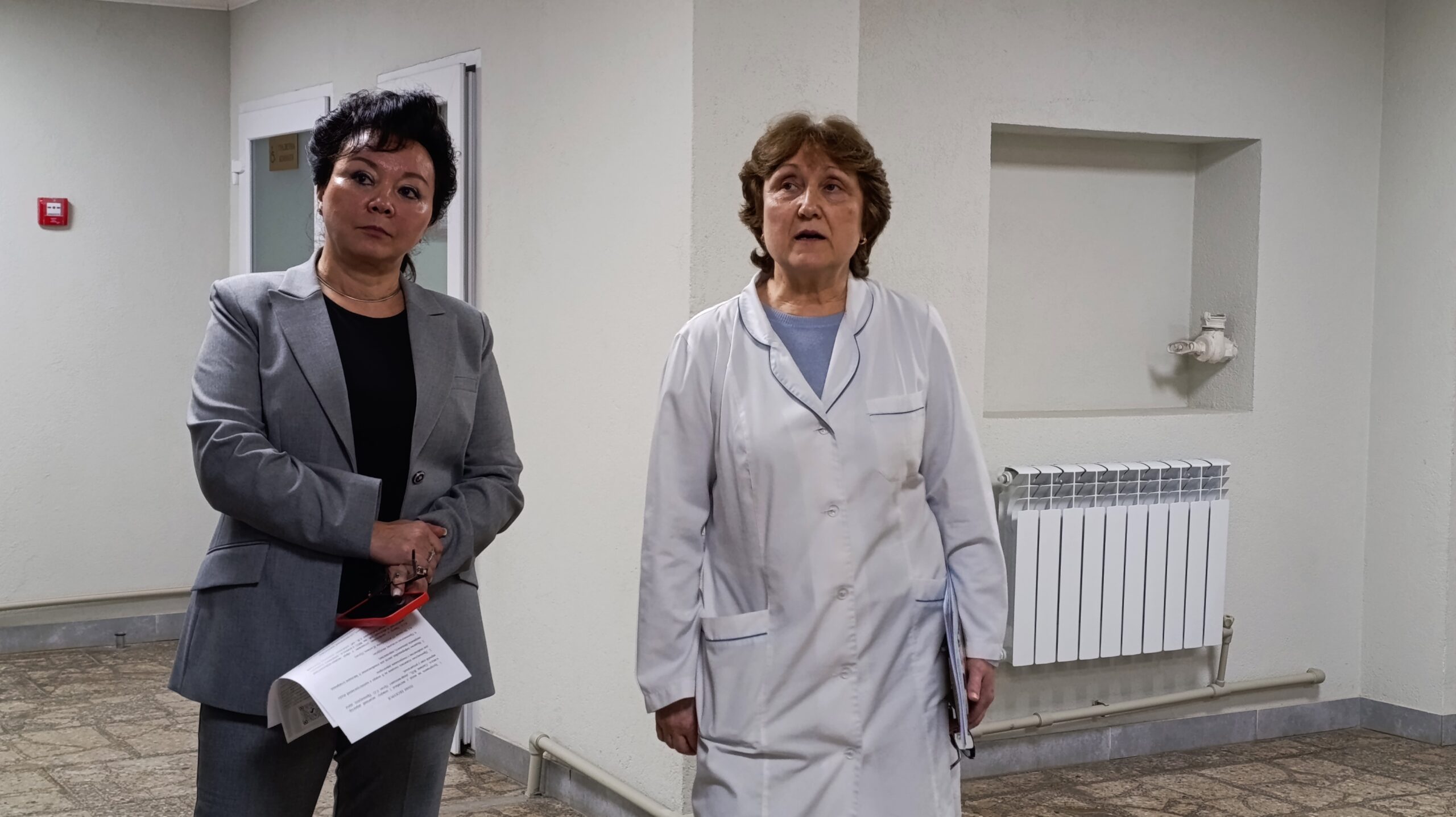
On November 5, participants of the Media Dialogue project visited the Scientific and Practical Medical Rehabilitation and Diagnostic Center of the Ministry of Health of Ukraine.
During the visit, journalists from Germany, Belarus, Georgia, and Armenia, as well as Ukrainian students and lecturers, learned about the institution’s work in rehabilitating and supporting those affected by the war.
Established in 1991, the Center initially became part of the medical support system for those impacted by the Chornobyl nuclear disaster. Today, it assists veterans, combatants, rescuers, internally displaced persons, people with disabilities, and victims of violence.
The Center’s management and staff conducted a tour for the participants, demonstrating the work of medical departments, modern treatment methods, and patient recovery practices. The guests observed rehabilitation sessions on an active-passive exercise bike designed for patients with demyelinating diseases, muscle spasms, and impaired upper- and lower-limb mobility. This equipment helps improve joint mobility and supports physical recovery.
After the tour, a conference was held with the participation of Doctor of Medical Sciences and General Director of the Center, Oleg Panchenko, who spoke about the conceptual approach to war trauma and the main challenges the institution faces. He also presented his book “Information Security in the Era of Turbulence: The State Governance Aspect” and gifted a copy to each participant.
He recalled a screening study of emotional reactions among adults and children to stress factors, conducted at the Center in 2014. Furthermore, he emphasized that children across all regions of Ukraine suffer psychological consequences of the war, regardless of their proximity to the frontline.
The meeting concluded with a Q&A session. The Director shared his vision for the future, including the development of a comprehensive physical rehabilitation program using methods such as cryotherapy, hydrotherapy, and physical relaxation, which have a positive impact on psychological well-being. He also expressed hope for the creation of a stationary complex and the introduction of sanatorium-resort treatment.